How Recreational Running Became a Shared Practice
How recreational running became a shared practice, from club traditions to neighbourhood meet-ups, and what those different ways of running together offer.
The common mistake in telling the history of recreational running is to treat it as a straight line from solitary jogger to organised club. It was never that tidy. Running together has taken different forms: formal club sessions, neighbours meeting for a loop, friends arranging company for part of a route. Each reflects a different idea of what a run is for.
Without a date, place or source, claims about when one form began to replace another are easy to overstate. A more useful history looks at the settings runners created for themselves: a club track, a local park, a regular meeting point, or simply a friend waiting at the end of the road. Those settings tell us how recreational running became social without requiring every runner to want the same thing.
What does the club tradition add to recreational running?
A running club gives a shared outing a structure. There may be a regular meeting time, a route or session plan, and someone who knows the group’s routine. That structure can make running feel less like a private undertaking and more like a recurring appointment.
Club culture can also carry expectations. A session organised around training may suit runners who want a prescribed workout, while a newcomer looking for company may not know whether to expect intervals, a steady run or an easy loop. The club itself is not the problem; the gap between its stated purpose and a visitor’s expectations is.
That is why a club run and a casual meet-up are not interchangeable. A club may have membership arrangements, established leaders and a training calendar. A neighbourhood group may have none of those things, but still depend on a familiar place and a regular time. One offers a more formal framework; the other often relies on people keeping an informal promise.
Why did informal running groups take hold?
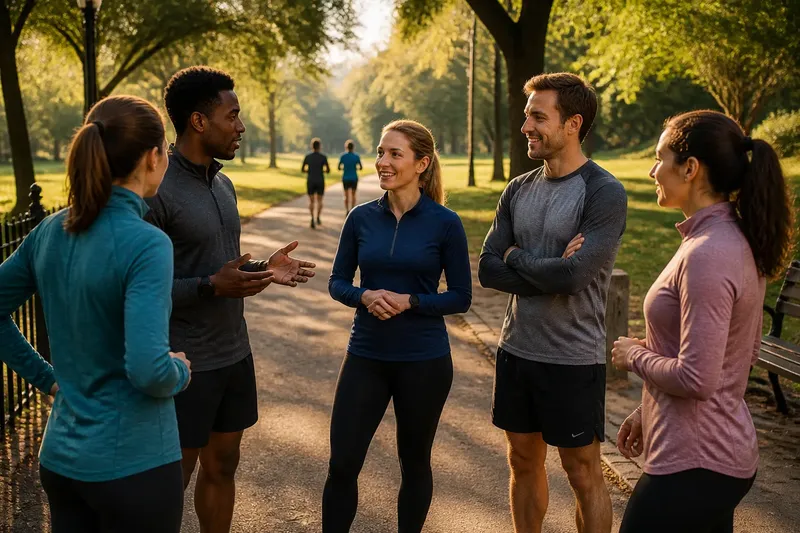
Informal groups make company possible without requiring a full club structure. A few runners can meet in a park, on a high street or at the entrance to a familiar trail and decide on the route together. Their arrangement might last for years, or only as long as everyone’s schedules allow.
This is a different kind of running culture from the club session, not necessarily a newer or lesser one. Some runners want coaching and a training plan; others want a shared start and no further administration. There is also the informal pair who arrange to meet because going alone is less appealing. The social form is shaped by what its participants need, not by a single model of belonging.
Regular meeting places and familiar faces can reduce the small friction of deciding whether to go out. The run acquires a simple sequence: arrive, greet, set off, catch up and part ways. No grand institution is required. A dependable corner near a park can do quite enough.
How do place and routine shape a shared run?
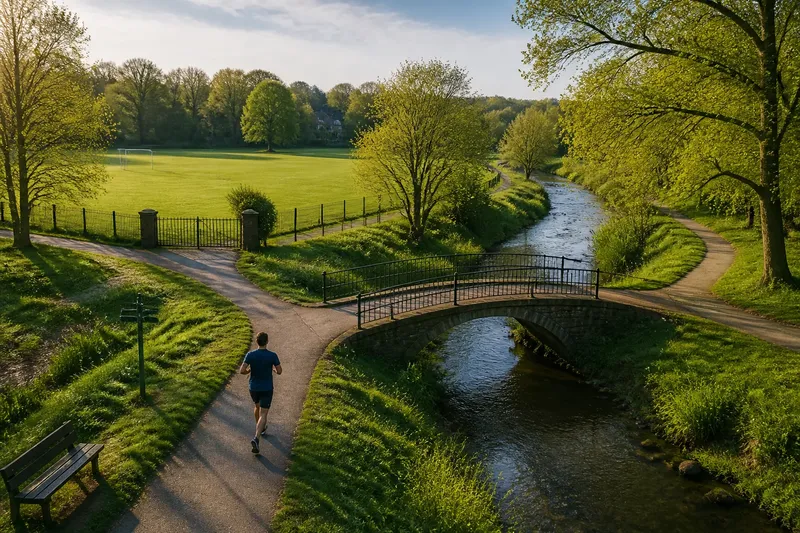
A route is not just ground to cover. A park loop, riverside path or set of residential streets gives a group a common reference point: where to meet, which way to turn, and where the outing ends. Familiar routes can make a group easier to join because the setting itself helps explain what is happening.
Routine does similar work. When a group meets at a recognisable place on a recurring day, runners can take part without negotiating the whole arrangement each time. That does not mean a routine is automatically welcoming. If only regulars know which gate to use or which path the group takes, a newcomer is still left to decode the custom.
Imagine a small group that meets beside the main entrance to a local park and runs a loop before heading home. One new runner arrives, asks whether the route returns to the same entrance, and learns that the group pauses at the crossing to regroup. The practical result is clear: the newcomer can join knowing where the route leads and where the group reconnects, rather than relying on guesswork.
What does running together mean today?
Running together need not mean staying shoulder to shoulder for an entire outing. It can mean sharing a start, meeting for one section, or arranging to talk after a run. These looser forms matter because runners may want company without wanting a club identity or a fixed social style.
The distinction between a group’s name and its actual custom still matters. “Social run” can describe an easy chat, a brisk outing or several small groups setting off at once. A runner interested in joining can ask where the group meets, how it is organised and whether its route is easy to leave. That is not an audition; it is a sensible way to understand the arrangement.
What is not worth the effort is trying to infer a group’s whole culture from its name, its matching shirts or a polished online description. A direct question to the organiser usually tells you more than a prolonged study of photographs. Running culture has always been made in ordinary encounters, not just in its labels.
What do runners often ask about shared running?
Is a running club the same as a running group?
Not necessarily. A club may have membership, scheduled sessions and an organised programme, while a running group can be an informal meet-up with little structure beyond a place and time.
Can recreational running be social without a club?
Yes. Friends, neighbours or colleagues can arrange to run together without joining an organisation. The shared routine may be as simple as meeting at a familiar park entrance.
Does running together mean keeping the same pace?
No. Some groups stay together, while others divide into smaller clusters or share only part of a route. The arrangement depends on the group’s habits, so it is useful to ask how it works before joining.
Why do some runners prefer a solo route?
A solo run offers control over the route, timing and amount of conversation. It can sit alongside group running; choosing one form for a particular outing does not require rejecting the other.
What does the history of recreational running leave us with?
The history of recreational running is not a contest between solitary freedom and organised company. Club sessions, local meet-ups, pairs and solo routes have all made room for different reasons to run. Some runners want instruction; others want a familiar face, a shared route or quiet time outdoors.
That variety remains the useful part. If a group’s customs fit, a runner can return and become part of its routine. If they do not, another arrangement—or a solo route—can still belong to the same broad running culture. For anyone searching how recreational running became a shared practice, the answer is less a single origin story than a series of ordinary choices about where to meet, who to run with and how much company to keep.